Ad Images vs. Organic Content Images
FEBRUARY 22, 2026

Sofia Enriquez
Marketing Strategist
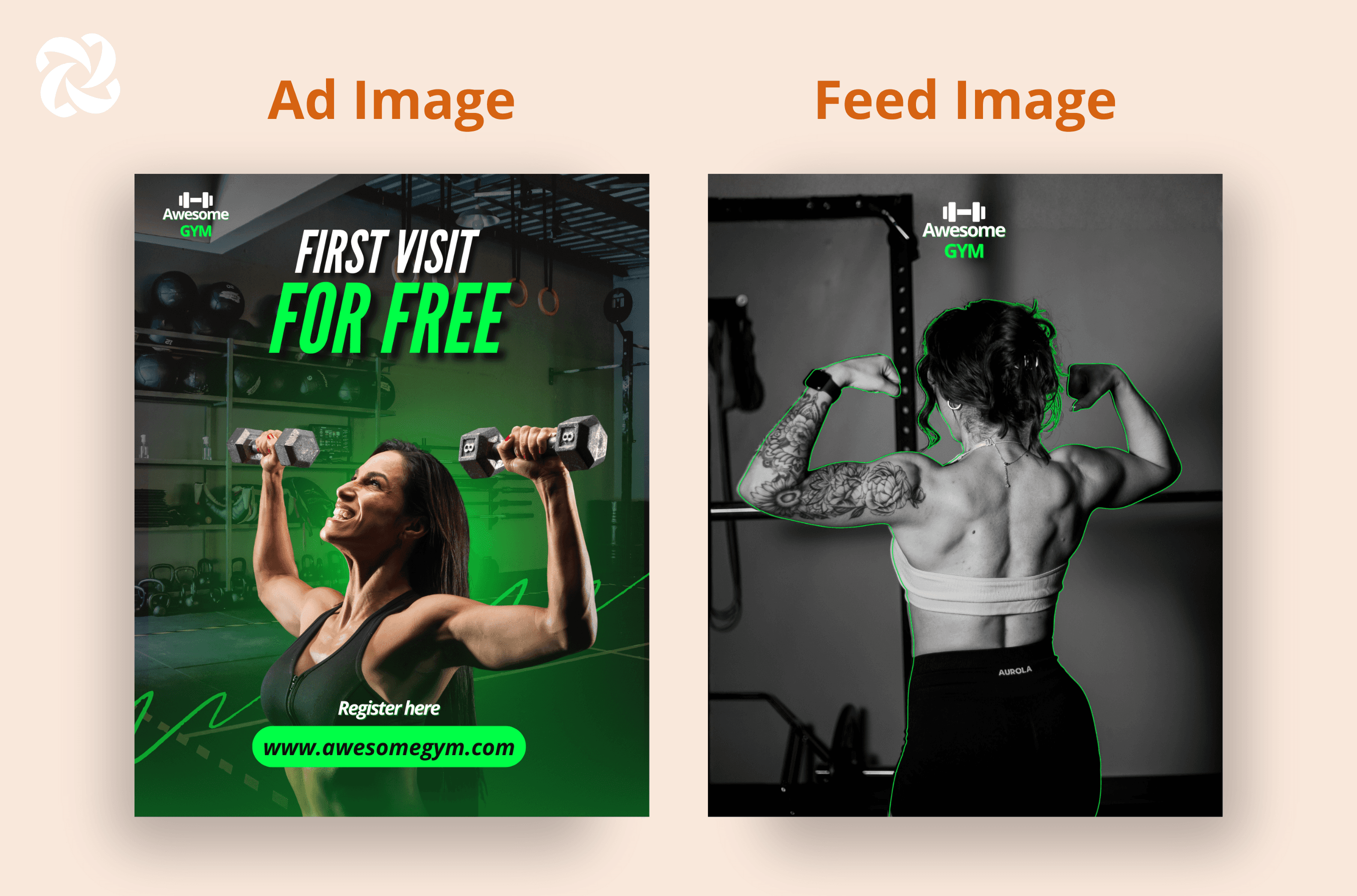
If you’re creating content for social media or running ads, you’ve probably asked yourself:
Should my images look the same for ads and organic posts?
The short answer: no — but why?
Let’s break down and find out!
What Are Ad Images?
Ad images are visuals created specifically for paid advertising. Their main goal is to drive action quickly — clicks, sign-ups, or sales.
Because people scroll fast, ad images need to:
Grab attention immediately
Communicate value in seconds
Support a clear call to action (CTA)
Common Characteristics of Ad Images
Bold visuals and strong contrast
Clear product focus
Text overlays highlighting offers or benefits
Promotional messaging (discounts, launches, urgency)
Designed to convert, not just inspire
Ad images often feel more direct and “sales-focused” — and that’s intentional.
What Are Organic Content Images?
Organic content images are visuals used in your everyday social media posts — the content you share without paying to promote it.
Their goal is to build relationships, not immediate sales.
Organic images are meant to:
Tell your brand story
Build trust and familiarity
Encourage engagement (likes, comments, shares)
Common Characteristics of Organic Images
More natural and authentic look
Lifestyle photos or behind-the-scenes content
Minimal or no text overlays
Focus on storytelling and education
Designed to feel human, not promotional
This type of content helps your audience connect with your brand over time.
Key Differences at a Glance
Ad Images
Goal: Conversions
Tone: Direct and persuasive
Design: Bold and eye-catching
CTA: Strong and clear
Timeline: Short-term results
Organic Images
Goal: Engagement and trust
Tone: Conversational and authentic
Design: Natural and relaxed
CTA: Soft or optional
Timeline: Long-term growth
Both are important — they just serve different purposes.
Why You Shouldn’t Use the Same Image for Both
Using the same image for ads and organic posts can hurt performance.
Ad images can feel too salesy in organic feeds
Organic images can feel too subtle for ads
Platforms often prioritize authentic-looking content organically
Paid ads need clearer messaging to convert
Instead, think of organic content as warming up your audience, and ads as closing the loop.
How to Make Each One Perform Better
Tips for Better Ad Images
Highlight one main benefit or offer
Use clean, high-contrast visuals
Keep text short and readable
Match the image with a strong CTA
Tips for Better Organic Images
Show real people, real moments, real use cases
Educate or entertain instead of selling
Keep branding subtle
Encourage conversation
How Tools Can Help You Balance Both
Creating two types of content can feel overwhelming — especially for small teams.
Tools like Bluumly help by:
Generating ad-ready and organic-style content
Tailoring visuals and captions based on your goal
Keeping your content on-brand across platforms
Saving time while staying consistent
This way, you don’t have to guess which image style to use — the strategy guides the content.
So…
If you treat them the same, you risk weaker results.
If you use each intentionally, they can work together to grow your brand faster and more sustainably.
Organic content builds trust. Ads drive action.